Dryer Vent Rerouting.
If your dryer vent runs too long, snakes through walls and ceilings, or terminates somewhere unsafe like an attic or crawlspace, it's costing you energy and drying time — and quietly increasing fire risk. We design and install a shorter, straighter, code-compliant route so your dryer can finally breathe.
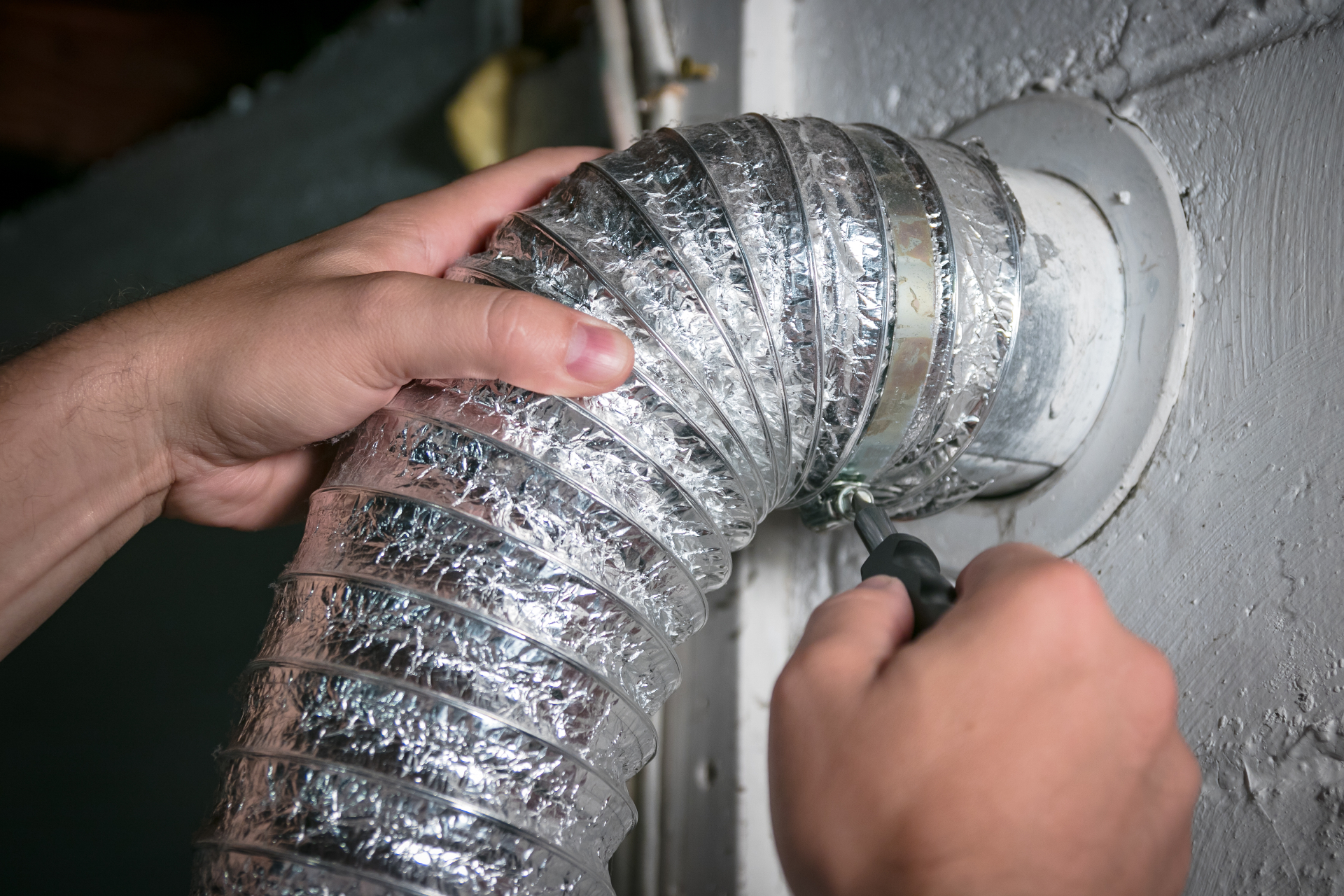
The Benefits You'll Notice
Faster Drying Cycles
A shorter, straighter run moves more air — most homeowners notice clothes drying in a single cycle again.
Lower Energy Bills
Your dryer stops working overtime, which means less electricity or gas and a longer appliance lifespan.
Reduced Fire Risk
Long, kinked, or sagging runs trap lint. A proper reroute eliminates the hot spots that ignite fires.
Code-Compliant Termination
We terminate to the outdoors — never into an attic, crawlspace, soffit, or wall cavity.
Rigid Metal Duct
We replace flex and foil with smooth-wall rigid metal where code requires, with minimal joints.
Custom-Engineered Path
Every home is different. We map the best route based on your floor plan, framing, and exterior access.
What to Expect on Service Day
Full System Inspection
We inspect the existing run end-to-end, take airflow readings, and identify every issue with your current routing.
Custom Route Design
We walk you through the recommended new path — distance, materials, termination point — and confirm pricing before we start.
Install & Verify
We install the new rigid line, seal all joints, add a proper exterior hood, and re-test airflow to confirm the fix.
Every Visit Includes
One flat price. No upsells, no surprises. Here's exactly what your technician will do.
- Full inspection of existing vent run
- Airflow and static pressure readings
- Custom rerouting plan with clear pricing
- Code-compliant rigid metal ducting
- Sealed joints and proper support
- New exterior vent hood with damper
- Removal and disposal of old ductwork
- Final airflow test & before/after photos
Frequently Asked
How do I know my dryer vent needs to be rerouted?
Common signs: clothes take more than one cycle to dry, the dryer or laundry room gets very hot, the vent run is over 25 feet, it has multiple sharp bends, or it terminates in an attic, crawlspace, or soffit instead of outdoors.
What's the maximum length a dryer vent should be?
Most manufacturers and building codes cap total equivalent length at 25 feet, minus 5 feet for every 90° elbow. If your run exceeds that, you'll typically need a shorter route or a booster fan.
Can you reroute through a wall, ceiling, or attic?
Yes — we route through whatever path makes the most sense for your home, using rigid metal duct and sealed joints. We never terminate into an attic or wall cavity.
How long does a rerouting job take?
Most residential reroutes are completed in a few hours to a single day, depending on the complexity of the new path and access to the framing.
Will I need any drywall or finish work after?
We try to plan routes that avoid major cuts, but if drywall work is needed we'll discuss it upfront so you can plan for patching or finishing.
Stop running two and three cycles. Reroute it right — once.
Book your free inspection today — most Katy appointments available within 24 hours.